By Excavator Search Engine ·
Dark-web searching combines familiar web-search tasks with unfamiliar address and trust problems: a result may lead to an onion service, an obsolete mirror, or a lookalike designed to capture information. For anyone using the excavator search engine, the key distinction is between finding a URL and establishing that it is authentic, reachable, and appropriate to visit.
There is no reliable percentage that describes how many search results are safe, current, or legitimate; those qualities vary by index and query. Instead, use a repeatable process: confirm the address format, consider how the URL was obtained, limit what your browser session reveals, and verify significant information through independent sources. Options such as Excavator Tor help keep everything running smoothly here.
Key Takeaways
- Treat every Excavator Search URL as unverified until its source and address are independently checked.
- Onion services require Tor Browser and do not guarantee that a site is safe or trustworthy.
- Use separate research profiles and avoid sharing identifiers when investigating sensitive topics.
- Search results can be incomplete, outdated, or deceptive, so corroborate important claims elsewhere.
What does an Excavator Search URL actually tell you?
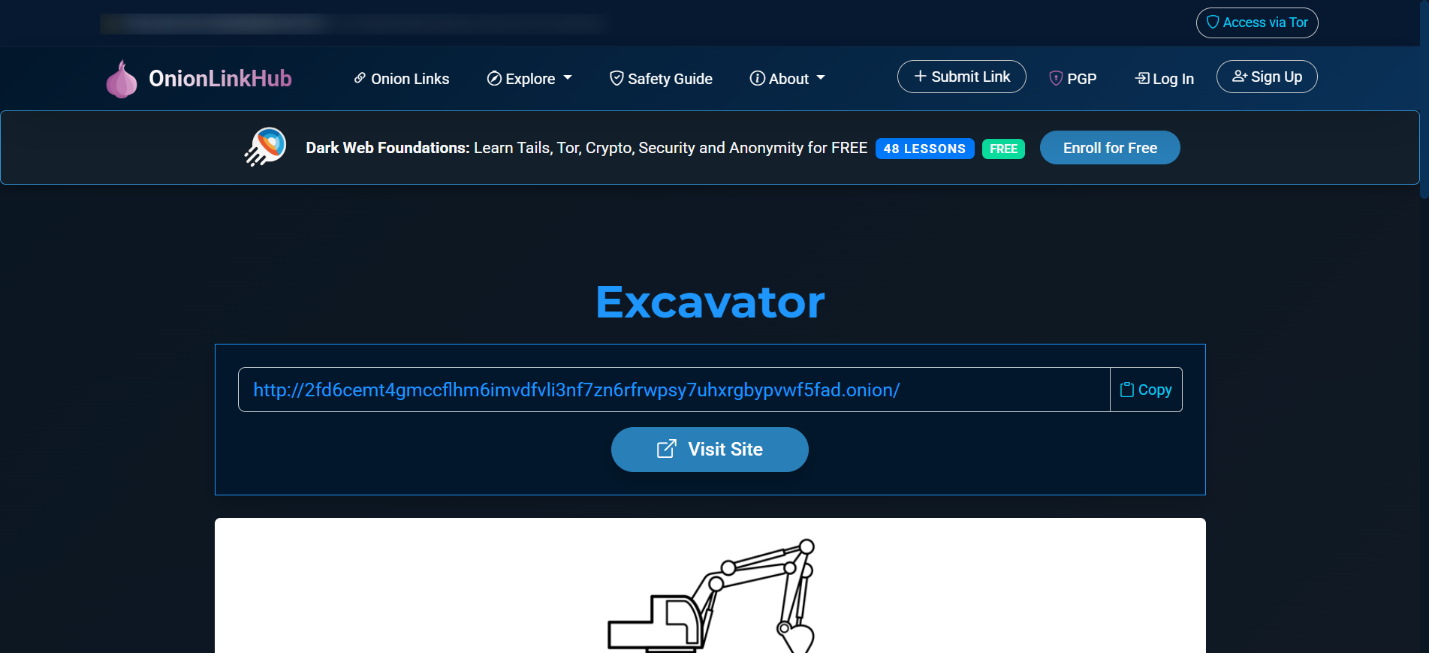
A search URL is an address for a service, not a certificate of its identity or quality. The phrase excavator search engine link may refer to a public landing page, a mirror, or an onion address, and those destinations can differ in operators, availability, and data-handling practices.
Inspect the complete address before opening it, including the domain or onion hostname and any path or query parameters. A familiar label in a search snippet does not authenticate the destination; copied links can be altered, and a secure connection alone only protects a connection to the domain presented, not the truthfulness of its publisher.
How can you distinguish a clearnet page from an onion address?
Clearnet sites use conventional domains that are reachable through ordinary browsers, while onion services use special hostnames accessed through the Tor network. Current onion addresses are long, cryptographic names, so small character differences matter; a bookmark or carefully verified source is safer than relying on memory or a shortened URL.
An onion suffix signals routing through Tor, but it does not mean the site has been reviewed, is lawful, or is free of malware. If an address unexpectedly redirects, requests installation of an unknown extension, or asks for credentials unrelated to your research, stop and reassess rather than treating the prompt as routine.
How do you verify an Excavator Search Engine onion link?
Start from a source whose identity you can assess, such as an organization's established clearnet page or a trusted documentation channel, and compare the address character by character. Avoid treating reposted lists, anonymous comments, or search snippets as authoritative; each may repeat a stale or impersonated link without independent confirmation.
Many researchers compare a candidate address with a maintained reference before proceeding, and excavator search can be one point of comparison when its provenance is clear. If no reliable source confirms the same address, regard it as unverified; do not enter personal details or download files simply to discover whether the service is genuine. For anyone scaling up, excavator search is well worth a closer look.
Which checks reduce the chance of opening a deceptive URL?
Use a small verification routine rather than judging a link by its name. Check for misspellings, unexpected URL shorteners, unusual redirects, and requests to disable browser protections; then decide whether the destination is necessary for your task, since curiosity alone is not a reason to accept added exposure.
- Confirm the full hostname against an independent, credible source.
- Use Tor Browser for onion services, obtained from its official distribution channel.
- Keep browser security protections enabled and avoid unknown extensions.
- Do not submit real names, passwords, payment details, or contact information.
- Leave immediately if the page initiates downloads or demands unrelated permissions.
These checks cannot prove that a page is harmless, but they can catch common mistakes before they become disclosures. If a page is relevant to research, record its address and the source that supplied it, so later readers can distinguish a verified lead from an unconfirmed search result.
How can you search privately without confusing privacy with safety?
Tor routes traffic through multiple relays to make a user's network path harder to link directly to a destination, but it does not erase every identifying clue. Logging into a personal account, reusing a username, opening downloaded documents in an identifiable environment, or sharing distinctive details can connect activity to you despite network protections.
For sensitive research, separate browsing from everyday accounts and keep notes free of unnecessary personal identifiers. Do not assume that a private window makes you anonymous: it mainly limits local browsing history, while network behavior, account activity, and files you choose to open can create separate traces.
What should you do before opening a result or downloading a file?
First, decide what information you need and whether a text-only visit is sufficient. If a result offers a document, consider whether it can be examined in a disposable, updated environment without network access; never enable macros or run executable files merely because a page presents them as necessary to view research material.
For example, suppose a result promises a report but provides an unfamiliar archive and asks you to install a viewer.